|
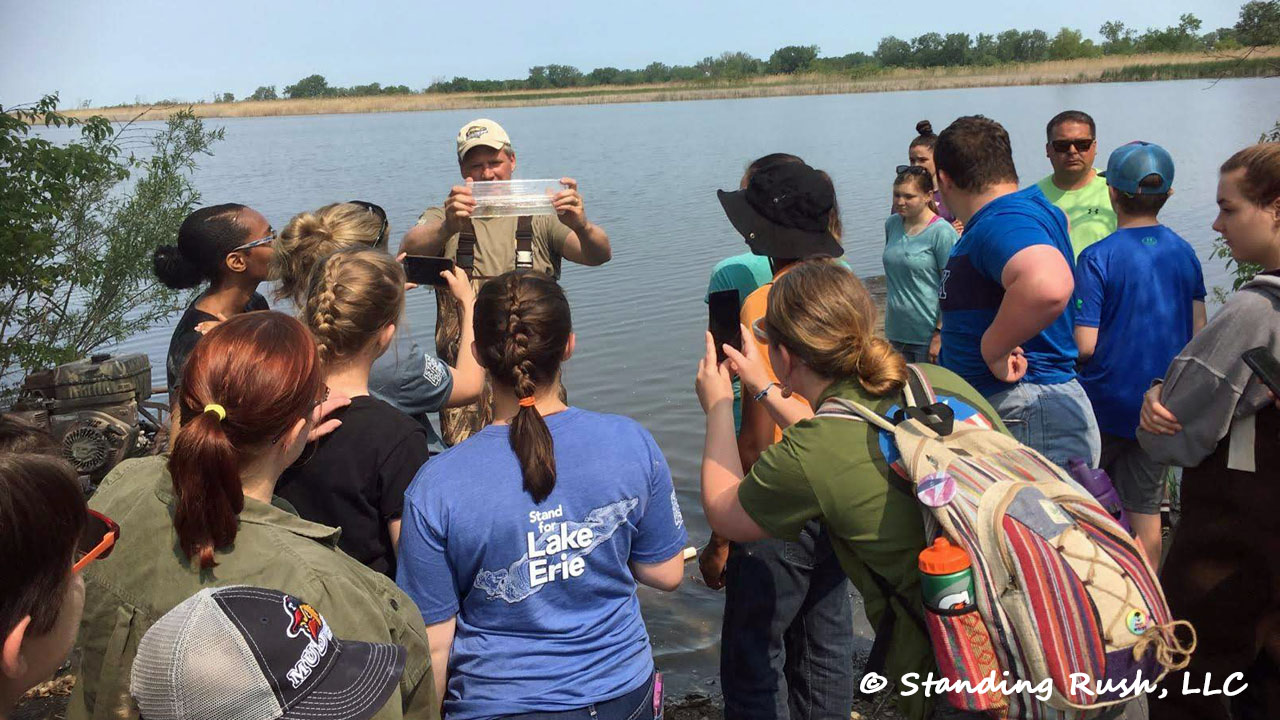
Students from Toledo Public School's Natural Science Technology Center (TPS-NSTC) help process the catch from a Fyke net
set at Standing Rush last Friday morning; a voluntary field trip to release fish provided the perfect opportunity to catch fish
(not to mention identify them, hold them, and marvel at their unique physical features and incredible diversity that can
best be appreciated through hands-on learning) |
If the first half of May was dominated by birds at Standing Rush (and with the awesome diversity, it sure felt like it was), our migratory visitors on the wing were forced to share the stage with fish during the latter half of last month. Considering that the U.S. Army Corps of Engineers just recorded water levels on Lake Erie to be the highest ever recorded in the month of May, I guess it's fitting. Whether we like it or not, water, water (truly is) everywhere . . .
 |
This year's northern pike release featured fingerlings
that started off smaller and ended up bigger
(on average) as compared to last year |
But lucky for us, so are fish. And thanks to
TPS's Natural Science Technology Center -- through an ongoing collaboration with Standing Rush and now Bowling Green State University -- we've just added more than 100 more healthy, happy northern pike fingerlings to the watery fray.
The release took place on a picture-perfect late spring morning late last week. But for the dozen or so students (and dozen or so parents, families, teachers, and adoring fans), it was actually one of the first days of summer vacation. That made the turn-out to Standing Rush even more impressive.
It was truly gratifying and awe-inspiring to witness the enthusiasm. And after another semester of working together, it was wholly satisfying to witness the attentiveness, genuine interest, and passion with which these kids experienced the marsh. Volunteers were eager to pull on hot neoprene waders to lend a hand, to get mud boots muddy, and to zip on life jackets to accompany there carefully nurtured foster fish to their new homes.
 |
Roy returning with a couple happy students and an empty plastic bag, having released a couple dozen more
northern pike fingerlings into the West Marsh |
 |
Students were as eager to learn fish identification (as with
this black crappie) as they were to man the 15' seine net
used to catch |
And while
releasing fish was the primary focus of the day, we wanted to make sure that we gave these students the hands-on opportunity to do some "sampling" as well. Fish sampling or monitoring goes way beyond capture by hook and line. It is important not only because it provides a glimpse into the diversity of fish species using a specific water resource, it also offers hints on population trends as well as how the environment can be augmented to support either higher numbers, use of the habitat by specific targeted species, or in some cases, both.
Sampling is also very important to this collaboration because (a) follow-up monitoring by BGSU with the hope of recapture of a subset of the released individuals will hopefully shed more light on the reproduction and early development of northern pike that is central to their specific research, (b) because fish monitoring in general can help us better understand how
our newly improved connection to Sandusky Bay is improving fish stocks within our specific marsh [and shed light on how similar structures can help fish stocks in similar habitats on Lake Erie and beyond], and (c) because Standing Rush is assisting TPS in building a reference and teaching collection of the fish of Ohio -- I'll write more on this exciting project very soon.
A forth reason fish sampling is important is it's just plain fun. It gives people a unique glimpse into an underwater world that can be difficult to see and appreciate otherwise. And especially for young people, seeing and handling all the different shapes, sizes, and colors can ignite a spark of interest. In my particular case, that spark was fortunate enough to be nurtured into a lifetime flame -- a lasting passion for all things fish.
Here are some more photos from a great day in the field (and in the water) and from the final day in the lab leading up to the release.
 |
Three students made hauling in the Fyke net a lot easier on Roy (foreground, left)
and me (center, top near float) |
 |
| A captive audience taking in the details about another (temporarily) captive fish |
 |
Me with a couple of TPS's most devout fish enthusiasts (both holding nets) with their equally enthusiastic and devoted
instructor, Laura Schetter Kubiak [note all four of us are donning our Standing Rush graphic T's!] |
 |
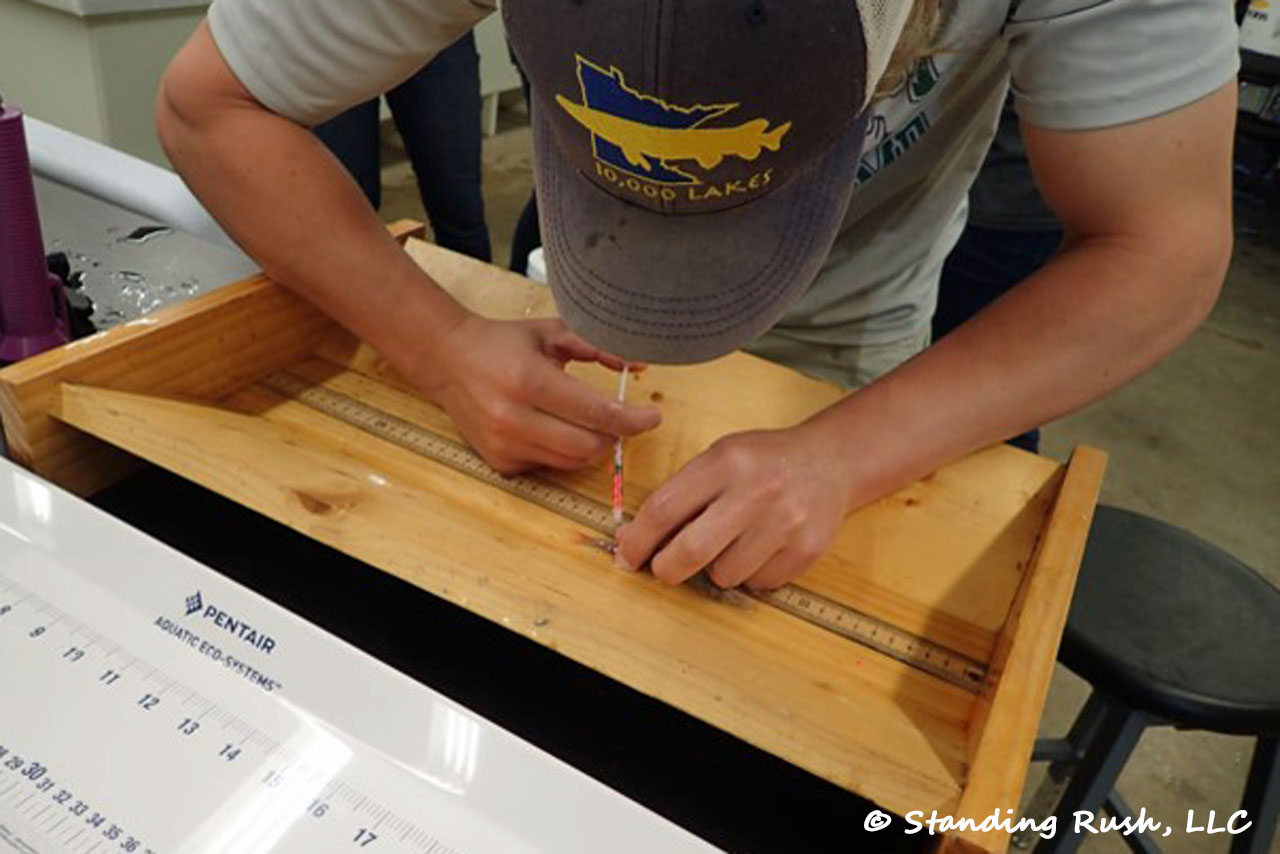
| Nate Stott, lead researcher from BGSU, tagging a fingerling northern pike in the TPS lab the day before release |
 |
| An incoming TPS sophomore helping with fish "tattooing"in the TPS lab last Thursday morning |
 |
| A newly "tattooed" northern pike at TPS (note florescent dye at base of anal fin) |
 |
One enthusiastic bunch -- smiles were broad and fresh stories were already being retold as the students loaded into their vehicles
and caravaned the 50 or so miles back to their school . . . so close, but in some ways a world away from the marsh
|